


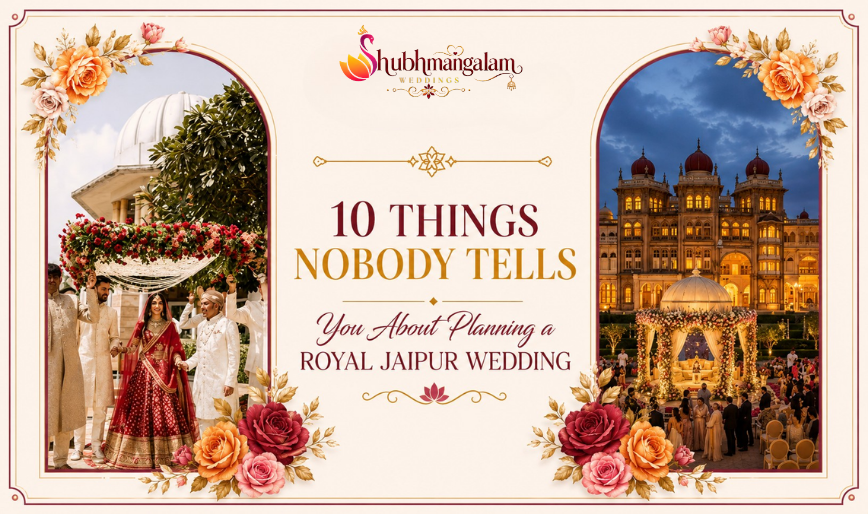
10 Things Nobody Tells You About Planning a Royal Jaipur Wedding
If there is one destination that appears in more Indian wedding mood boards than any other, it is Jaipur. The Pink City, with its amber forts and marigold-draped havelis, its regal palaces and its vibrant cultural soul, has come to represent the apex of the Indian destination wedding experience. Couples dream of elephant processions through ancient gateways, of candlelit dinners in Mughal courtyards, of mehndi evenings soundtracked by kalbeliya dancers spinning in the fading light. And those dreams are absolutely achievable — Jaipur delivers on every romantic promise it makes.
But planning a Jaipur wedding is also a complex, nuanced undertaking that comes with its own unique set of challenges, considerations, and wonderful surprises. Having planned dozens of royal Jaipur weddings over 15 years, our team at Shubh Mangalam has learned a great deal — some of it through triumph, some through hard-won experience. Here are ten things nobody tells you when you first start dreaming of your Jaipur celebration.
First, book your heritage venue at least 12 to 18 months in advance. The most iconic Jaipur venues — Amer Fort, Samode Palace, Rambagh Palace — are extraordinarily sought after, and their wedding calendars fill up very quickly, particularly during the peak November-to-February wedding season. If you have your heart set on a specific property, early booking is not just advisable; it is essential.
Second, the weather matters more than you think. Jaipur summers (April to June) are genuinely very hot, with temperatures regularly exceeding 40 degrees Celsius. Winter (October to February) is perfect — cool, clear, and dry. Monsoon season (July to September) brings beautiful green landscapes but also rain that can complicate open-air event logistics. Plan your wedding season carefully, and if you must marry outside the ideal window, ensure robust weather contingency arrangements are in place.
Third, Rajasthani cultural entertainment is not an optional add-on — it is the soul of a Jaipur wedding. The kalbeliya dancers, the bhopa balladiers, the Manganiyar folk musicians, and the magnificent ghoomar performers are what transform a beautifully decorated event into an authentically Rajasthani experience. Budget meaningfully for cultural programming — it will be among the most memorable elements of your entire celebration.
Fourth, the elephant and camel arrangements for your baraat require careful advance planning and coordination with local animal welfare authorities. These magnificent traditions are beloved for good reason, but they require experienced handlers, appropriate welfare provisions, and proper advance permits. Work with a planner who has established relationships with responsible animal management teams.
Fifth, Jaipur's finest vendors — photographers, caterers, decorators — are in tremendous demand during peak season. Building your vendor team early, ideally alongside your venue booking, ensures access to the best talent rather than whoever remains available as your date approaches.
Sixth, local cuisine is your greatest catering asset. Authentic Rajasthani food — dal baati churma, laal maas, gatte ki sabzi, malpua — prepared by local specialists is both extraordinary in quality and deeply evocative of place. Incorporate it generously into your menus, alongside contemporary options for guests with varied palates.
Seventh, lighting design is absolutely critical in heritage venues. The gorgeous stone surfaces of forts and palaces respond magnificently to thoughtful lighting — and the difference between a well-lit and a poorly-lit heritage venue is the difference between magical and mediocre. Invest in a specialist heritage lighting designer who understands how to work with these extraordinary architectural canvases.
Eighth, guest accessibility planning requires particular attention in Jaipur. The city's old heritage properties often have uneven stone floors, narrow corridors, and limited accessibility infrastructure that can present challenges for elderly guests or those with mobility limitations. Plan guest assistance proactively and communicate venue accessibility details clearly in advance.
Ninth, shopping in Jaipur's famous bazaars is a highlight for most wedding guests — and building in time for a curated shopping excursion is a wonderful element to incorporate into your wedding weekend programme. Johari Bazaar for jewellery, Bapu Bazaar for textiles, and the craft villages outside the city for block printing and blue pottery are perennial favourites.
And tenth — perhaps most importantly — give yourself permission to surrender to the magic. Jaipur has a way of exceeding expectations, of revealing a beauty and a grandeur and a cultural richness that no planning document or mood board can fully capture. When you arrive, when you see the amber walls glowing in the afternoon light and hear the shehnai carried on the desert breeze, let go of the spreadsheet for a moment. Trust your team. Trust the city. And simply be present in the most extraordinary celebration of your life.